Interiors & Design
How to Style the St Geneve Avalon Throw Across the Home
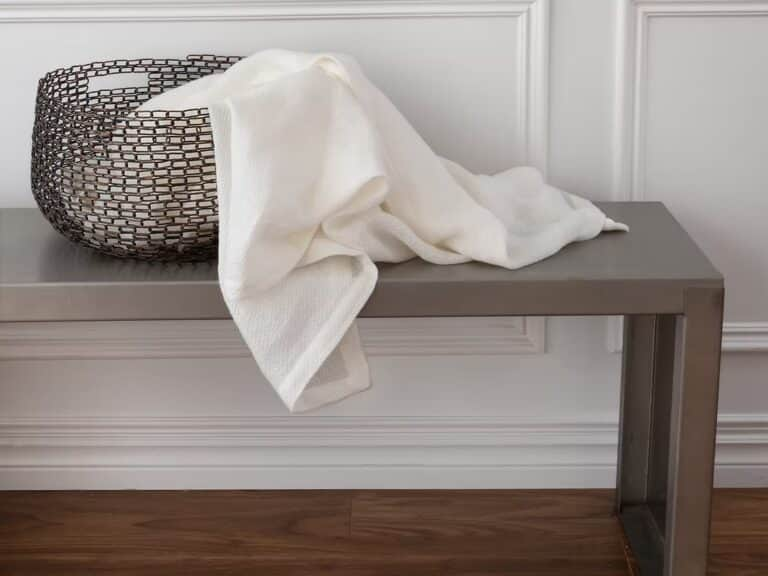
A well-placed throw does more than keep the chill at bay. With its airy honeycomb weave and soft natural-white colour, the St Geneve Avalon Linen Throw can bring texture, ease and a little visual order to beds, sofas and the corners where a home invites you to pause.
There is a useful distinction between a room that is finished and one that feels lived in. The first may have the right furniture, considered colours and a clear sense of proportion. The second has a book left open, a chair that earns its place and a soft layer within reach when the evening turns cool. A throw can help provide that feeling without asking a room to be redesigned around it.
The St Geneve Avalon Linen Throw is made from 100% linen woven in Portugal and sewn in Canada. Its honeycomb weave gives the surface a raised, dimensional quality; its natural-white tone is quiet enough to sit comfortably beside a range of colours. At 49 by 70 inches, it is sized for versatile use: across the end of a bed, over the arm of a sofa or folded on a chair for a reading break.
The point is not to make every room look styled. It is to give a textile a job, then let its texture do some of the work. Placement, proportion and care determine whether a throw feels like part of the room or an afterthought. The following ideas offer a practical way to use it across the home and through the seasons.
Start with the texture, not the colour
Natural white is often treated as a blank. In practice, it has a presence of its own: it catches light, separates darker layers and makes the surface around it easier to read. The Avalon’s honeycomb structure adds further interest without relying on a strong pattern. Its small, repeating relief creates a subtle play of light and shadow, particularly when the throw is draped rather than pulled taut.
That makes it a useful companion to materials with a different character. Against smooth cotton bedding, the weave adds depth. On a leather or tightly upholstered sofa, it introduces a softer note. Beside timber, wool or a plain painted wall, the natural-white colour can keep the composition from feeling visually heavy. The goal is contrast in texture, not a collection of competing statements.
A room can easily acquire too many focal points: a vivid rug, patterned cushions, a dramatic headboard and a collection of decorative objects all asking for attention. In that setting, a restrained throw can be more effective than another bold accent. Where a room is spare, its woven surface offers detail at closer range. In both cases, restraint is an active choice. It gives the eye somewhere to rest.
On the bed: a layer with a clear purpose
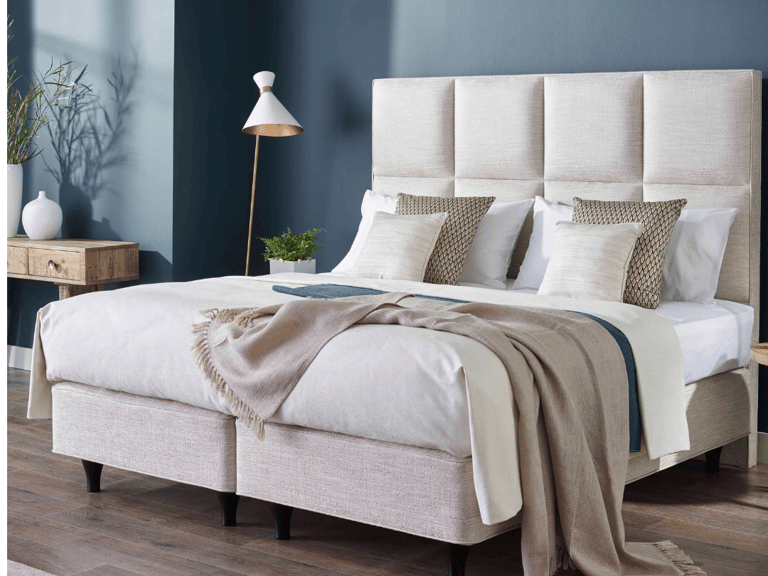
A bed is the most natural place to begin. At the foot, a throw provides a finishing layer and a practical source of extra warmth. Fold it lengthwise into a broad band and place it across the lower third of the bed for a clean, composed effect. This approach works especially well when the sheets and duvet are already doing most of the visual work: the throw adds a change in texture without covering the bedding completely.
For a more relaxed arrangement, fold the throw loosely and set it slightly off-centre. A little asymmetry can make a carefully made bed feel less formal. The fold need not be perfect; the honeycomb weave has enough surface detail to look considered without exact, hotel-style lines. Keep some of the underlying bedding visible so the throw reads as a layer, rather than a coverlet that happens to be too small.
It can also be useful when the temperature changes overnight. A lightweight linen layer is not a replacement for a duvet or a substitute for choosing bedding suited to the room. Instead, it offers an accessible extra layer for someone who wants warmth without adding substantial weight. On a guest bed, that flexibility is especially welcome: visitors can pull it closer or leave it folded at the end.
The rest of the bed matters. If the duvet is heavily textured, the throw’s patterned weave may blend into the visual field rather than stand apart. If every layer is smooth and flat, the throw will have more contrast. Consider the surface as a whole: one or two changes in texture are often enough. Matching every item is not a requirement for cohesion; repeating a colour, material or simple shape elsewhere in the room will usually do more.
On a sofa: relaxed, but not abandoned
A throw on a sofa can communicate an invitation: sit down, get comfortable, stay a while. It can also provide a light layer over the legs during a quiet evening or protect a frequently used area from everyday contact. The trick is to avoid treating the sofa as a display shelf. A throw that is folded with excessive precision may look stiff; one that has collapsed into a heap may seem neglected.
Try folding the Avalon in half lengthwise and laying it over one arm, allowing the remaining length to fall naturally down the side. The drape matters more than symmetry. Alternatively, fold it into a broad rectangle and place it over a seat cushion or the back of a sofa, keeping the edge visible. The honeycomb weave will show most clearly when the fabric is not tightly compressed or hidden beneath cushions.
Natural white can brighten dark upholstery and sit quietly with pale fabrics. It also pairs readily with colour: deep green, rust, navy or soft blue can all make a striking counterpoint. To keep the arrangement from looking disconnected, echo one of those colours elsewhere in the room, perhaps in a cushion, a book cover or a small object. This is not a rule of matching; it is a way of giving the eye a route through the space.
If the sofa is already crowded with cushions, remove one before adding the throw. Good styling is often an act of editing. A tactile textile needs a little breathing room to be seen, and a seat should remain a seat. A few functional layers can make a space warmer; a stack of decorative layers can make it harder to use.
Give reading corners a practical centre
A chair beside a lamp can become a destination with surprisingly little effort. Place the throw over the chair’s back or across one arm, then keep a small table or another stable surface within reach for a book and a drink. The textile adds comfort, but the arrangement works because it supports an activity. A decorative corner without a use is easy to overlook; a place prepared for reading is more likely to be occupied.
The Avalon’s dimensions suit this sort of personal-scale use. It can be folded over a chair without overwhelming it, then unfolded when an extra layer is welcome. On a compact occasional chair, a loose drape may be enough. On a larger armchair, a broad fold across the back can help connect the chair visually to nearby bedding or upholstery. Keep the throw clear of the floor where possible: trailing fabric can collect dust, snag or become a tripping hazard.
The same idea can work in a bedroom, beside a window or in a quiet landing. The setting need not be a formal reading nook. What matters is that the throw remains easy to pick up and put away. Styling that asks for constant adjustment is rarely practical for long.
Carry the look into shared spaces
A throw can move between rooms as needs change. In a living room, it may be used during a film or an evening with an open window. In a guest room, it may offer a supplementary layer. On a favourite chair, it can soften a hard surface. The versatility is part of its value: it does not need a single permanent location to earn its place.
In an open-plan space, textiles can help distinguish one activity from another without creating a physical barrier. A throw over the sofa, for example, reinforces the seating area as a place to settle, while a similar soft layer at the end of a bed can make a sleeping area feel more composed. The rooms do not need to match. Repeated material and a consistent, restrained palette can provide enough continuity.
In a more formal sitting room, keep the arrangement simple. Fold the throw over an arm or place it across the back of one chair rather than every seat. A single piece can look deliberate precisely because it is not repeated everywhere. In a family room, by contrast, accessibility may matter more than display: choose a placement that allows someone to take it down and return it without undoing the room.
Adjust the layers as the seasons shift
The way a room is layered can change over the year. In warmer months, a throw may serve primarily as a tactile accent or a light cover during cool mornings. Keep it loosely folded on a chair or at the end of the bed, where it is available without dominating the arrangement. Natural fibres can feel pleasant in varied conditions, but comfort is personal and depends on the room, the sleeper and the rest of the bedding.
When the weather cools, use the throw as one layer in a broader system. It can sit over a duvet during the day and be drawn over the legs in the evening. Pair it with warmer bedding when needed rather than expecting a single lightweight textile to provide all-night insulation. A home should adapt to actual temperatures, not to a photograph of a bedroom.
Seasonal change can also be handled through small adjustments. In spring, let the throw’s natural-white colour lighten a darker bed. In autumn, set it against deeper tones or rougher textures such as wool. The contrast can suggest warmth without requiring a seasonal overhaul. Because the hue is neutral, it can remain in use while other accents change around it.
Care for the fibres—and the drape
A natural-fibre textile’s appearance is shaped by how it is handled as much as by where it is placed. Linen is valued for its distinctive texture and relaxed drape, but rough washing, excessive detergent or over-drying can work against the qualities that make it appealing. Follow the care instructions provided with the throw, and treat routine laundering as a way to preserve its feel rather than force it into a permanently crisp finish.
The care guidance for the Avalon advises avoiding an overcrowded wash and recommends a fabric bag to help prevent snags. Give the item adequate water in the cycle, use a modest amount of detergent and avoid fabric softener, bleach, and detergents containing bleach, whiteners or alkaline agents. Too much detergent can leave residue, which may build up in the fibres over repeated washes.
- Wash the throw with enough room for water and movement rather than packing the machine full.
- Use a small amount of detergent and avoid softener and bleaching products.
- Use medium-temperature settings as directed, rather than hot wash or drying settings.
- Remove the textile before it becomes overdried; excessive drying can affect its hand and drape.
- Store it clean and dry, folded loosely so it is ready for its next use.
The supplied instructions also recommend spacing out bed linens in the wash and drying only a single sheet set or duvet cover with shams at a time. A throw is not a sheet set, but the principle of avoiding an overloaded machine is relevant: room to move helps reduce unnecessary friction. When in doubt, defer to the manufacturer’s specific directions for the item and the capacity of the appliance.
Linen does not have to be pressed into immaculate flatness to look cared for. A relaxed finish is part of its character. If creases appear, a gentle shake and a careful refold may be enough for everyday use. The aim is not to erase every sign of use; it is to keep the textile clean, comfortable and free of avoidable damage.
A considered textile is one that gets used
A natural fibre, a careful weave and a well-finished edge matter, but longevity also depends on habits. A throw kept out of reach, used only for display and washed without regard to its care requirements may not become a lasting part of a home. One that is easy to take from a chair, carry to the sofa and return to a useful place is more likely to be appreciated over time.
That is a modest but meaningful way to think about sustainable living: use what you own, maintain it sensibly and make choices that suit real routines. The Avalon is described as made with sustainability in mind, and its linen is woven in Portugal before the throw is sewn in Canada. Those details describe parts of its production journey; they do not, on their own, answer every question about environmental impact. For consumers, useful questions include where fibres come from, how an item is made, how it should be cared for and whether it is likely to remain useful.
A versatile throw has an advantage here. It can serve as a bedding accent, an extra comfort layer and a soft furnishing for a living space, rather than being tied to a single season or room. Its natural-white colour is easy to combine, while the honeycomb weave supplies enough character to stand on its own. These are not guarantees of longevity, but they do make repeat use easier.
The quiet work of a good layer
The strongest styling choices are often the ones that improve a room without taking it over. On a bed, the Avalon can mark the transition from duvet to footboard. On a sofa, it makes comfort visible. In a reading corner, it places warmth within reach. Its weave contributes texture, while its restrained colour gives the surrounding materials room to speak.
Start with one placement and live with it for a few days. Notice whether the throw is easy to reach, whether its scale suits the furniture and whether its colour helps the room feel more balanced. Adjust the fold, shift it to another seat or let it move between rooms. The best arrangement is not necessarily the most polished one. It is the one that makes the home more comfortable, and keeps looking right after somebody uses it.
Care and product details should be checked against the current manufacturer guidance supplied with the textile.